
Menu
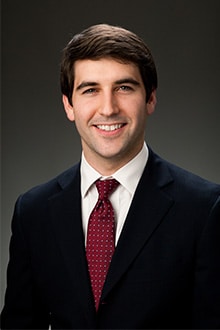
Elliot Sol Abrams
Phone:
(919) 833-3114
Elliot Sol Abrams represents individuals in high-stakes cases. A substantial portion of Elliot’s practice involves white-collar criminal defense, NCAA matters, and civil rights cases. Elliot also handles select civil matters, including wrongful death cases and toxic exposure cases, and defends licensed professionals facing disciplinary actions, among other matters.
In 2022, Elliot received the Public Justice Trial Lawyer of the Year Award for his work securing a $75 million verdict for two wrongly convicted men in a federal civil rights trial - the largest wrongful conviction civil rights award in United States history to date.
Elliot was also named one of the Top 10 Most Influential People in Triangle Sports by the Raleigh News & Observer for his work obtaining eligibility for student-athletes, including UNC's star wide receiver Tez Walker.
Elliot has consistently been selected for inclusion in Best Lawyers in America and North Carolina Super Lawyers, has been inducted into the Business North Carolina Legal Elite Hall of Fame for Criminal Defense, is ranked by Chambers USA, and has been featured in Attorney of the Month magazine, among other publications.
Elliot is also a member of the Plaintiffs' Steering Committee in the Camp Lejeune water litigation. This committee is responsible for litigating what is likely the largest mass tort lawsuit in United States history. It seeks to compensate victims of the toxic water at Marine Corps Base Camp Lejeune and was made possible by Congress' passage of the Camp Lejeune Justice Act.
Elliot is a Governor-appointed member of the Governor's Crime Commission; he is a former President of the Federal Bar Association Eastern District of North Carolina Chapter; and he serves on the board of directors of the Center for Death Penalty Litigation. He has authored and co-authored chapters in the North Carolina Bar Association’s General Practitioner’s Guide to Criminal Law (2016), The Rule-Out Method of Criminal Defense, by primary author David Ball; and Klinkosum on Criminal Defense. He has written numerous articles for the national criminal defense publication, The Champion, and has lectured for attorney organizations and civic groups on a wide array of topics including NCAA eligibility, antitrust matters, asset forfeiture and high-tech government surveillance techniques.
Elliot has represented people from all walks of life including North Carolina General Assembly members, other high-level government officials and judges; multi-million-dollar corporations; members of the United States Army Special Forces, as well as other military and law enforcement officers; and corporate officers, bankers, doctors, lawyers, accountants and real estate agents.
He has first-chaired multiple trials resulting in complete acquittals, including cases involving serious federal charges and first-degree murder. He has successfully argued appeals in both state and federal appellate courts. And he has obtained many millions in verdicts and recoveries for clients in civil matters.
In sports-related cases, Elliot defeated allegations against his client in the long-running NCAA infractions case against the University of North Carolina at Chapel Hill, represented numerous NCAA coaches, and has successfully obtained NCAA eligibility for a large and growing number of top-prospect NCAA athletes.
In criminal matters, in addition to winning trials, Elliot helped clients avoid charges, obtain dismissals, and defend against a wide array of alleged offenses, including conspiracy, bribery, bank fraud, healthcare fraud, mail and wire fraud, tax evasion, money laundering, antitrust, obstruction of justice, and violations of the Racketeer Influenced and Corrupt Organizations Act (RICO), as well as drug offenses, gun charges, sexual assaults, and murder. He has also won two Motions to Suppress high-tech government surveillance in separate large-scale joint federal and state investigations, and has won new trials for three federal defendants. He has obtained presidential commutations for multiple clients and has secured compassionate release and other post-conviction relief on behalf of inmates and other clients.
A few examples of Elliot’s work on federal forfeiture cases include obtaining the release of over $2 million in seized client assets in a long-running bribery prosecution, convincing the Fourth Circuit Court of Appeals to overturn a longstanding rule that allowed the government to seize citizens’ innocent assets before a criminal conviction, and obtaining the release of over $1 million in assets in a recent healthcare fraud case.
In civil matters, Elliot won the largest trial verdict ($75 million) in United States history in a wrongful conviction case, and has helped clients in breach of contract and fiduciary duty claims, RICO violations, False Claims Act matters, healthcare program reimbursement demands, and tortious interference with business and unfair trade practices suits.
Elliot has conducted internal investigations responding to government, whistleblower or other allegations of illegal conduct, and has represented clients before various administrative boards and other adjudicative bodies, including the NCAA Committee on Infractions, various government ethics and professional licensing boards, the FDIC’s enforcement division, the SEC, the CFTC, and numerous university disciplinary committees.
Elliot earned his law degree at Georgetown University, where he was a member of the moot court team and won Best Brief in a regional competition. He was also the Treasurer for Habitat for Humanity. During law school, he worked with Joe Cheshire to prepare and try a four-week first-degree murder trial in which they obtained a full acquittal. Elliot obtained his undergraduate degree from the University of North Carolina at Chapel Hill, where he was selected to the Phi Beta Kappa honor society and graduated in the top 3 percent of his class. In high school, he was a captain of both the varsity wrestling and varsity lacrosse teams and a letterman in varsity soccer. He has also competed on a blue marlin tournament fishing team that won the Governor’s Cup (a competition between fishing teams in North Carolina and South Carolina).
Select Successes
*Note that the specific cases referenced above and below do not represent all of the cases Cheshire Parker Schneider & Abrams & Abrams has handled, and that past results do not guarantee similar outcomes in future cases. Every case is unique.
- Obtained a $75 million verdict in federal civil rights case for two wrongly convicted men (Washington Post, NY Times, News & Observer).
- Won not guilty verdict in first-degree murder trial in which the FBI was the lead investigative agency.
- Obtained NCAA eligibility for numerous top-prospect NCAA athletes.
- Obtained dismissal of a 101-count federal indictment of a healthcare professional related to prescription fraud.
- Obtained dismissal of a federal indictment in a money laundering prosecution.
- Successfully avoided prosecution or civil penalties of a physician being investigated for False Claims Act violations exceeding $20 million.
- Won unanimous en banc opinion by the United States Court of Appeals for the Fourth Circuit in United States v. Chamberlain, 16-4314 (2017) (Lawyers Weekly Article).
- Obtained the release of over $2 million in seized assets in a long-running federal bribery prosecution.
- Defeated NCAA infraction allegations in the long-running NCAA infractions case against the University of North Carolina at Chapel Hill (NCAA.org).
- Obtained dismissal of an FDIC enforcement action against a national bank officer.
- Successfully avoided prosecution of an officer of a national bank in a bank fraud investigation.
- Successfully avoided prosecution of a doctor facing a multi-million-dollar healthcare fraud investigation.
- Won a Motion to Suppress GPS Tracking in a large-scale joint federal and state investigation.
- Won a Motion to Suppress a Wiretap in a separate large-scale joint federal and state investigation, and obtained a dismissal of the case by the government as a result.
- Won new trial motions in three separate federal criminal prosecutions.
Meet Our Attorneys
John Hill Parker
John Hill Parker (retired) was born on February 1, 1944, in High Point, North Carolina, and was raised in nearby Lexington, North Carolina; in 1966 he graduated from the University of North Carolina at Chapel Hill. He received his law degree from the… Read More
John Hill Parker (retired) was born on February 1, 1944, in High Point, North Carolina, and was raised in nearby Lexington, North Carolina; in 1966 he graduated from the University of North Carolina at Chapel Hill. He received his law degree from the… Read More
Practice Areas
For More Information